
Boxing Without Violence: How Children Learn to Express Their Anger in a Healthy Way
There are those moments that I know all too well—and probably most other parents do too. Even now—as a mother of three teenagers—this issue comes up all the time. That moment when you realize your child is just overwhelmed and losing their temper: anger.
These days, my kids’ anger usually looks very different from how it used to. There are fewer tantrums on the living room floor, less loud screaming. But the emotions? They’re still there. And sometimes I feel like they’re even more intense than they used to be.
I remember very well how the issue of anger first came up for me as a mother: with young children who hadn’t yet learned to process their emotions at all. Back then, I often asked myself exactly the same question that I still ask myself sometimes today:
How do I handle this properly? How can I help my children develop a healthy approach to this and get in touch with their feelings?
I don't think I've found a magic cure-all for every emotional problem, but I have found a tool that works really well for us when it comes to emotional regulation: the punching bag.
Because I've learned that anger isn't the problem. Anger is an important part of the solution.
Contents:
Anger is a natural part of life—at any age
In my daily life, the issue of anger has, of course, been a constant presence for many years. When my children were young, their anger was often loud, direct, and unfiltered. Today, as teenagers, it sometimes manifests itself in a completely different way:
Withdrawal
Irritability
Slamming doors instead of yelling
But the origin is the same.
Anger is one of the most fundamental human emotions. It arises when boundaries are crossed, when needs go unmet, or when things simply become too much.
The only difference is that young children express their anger outwardly, while teenagers often do so in more complex ways.

The real problem: Where does all this anger go?
I myself grew up hearing phrases like:
“Calm down.”
“It’s not that bad, is it?”
“Don’t be such a drama queen”
And I’ve noticed how quickly you slip into these patterns yourself during stressful moments—whether your child is three or thirteen. But anger isn’t something you can just turn off. It’s energy. And energy wants to move. That was true when my children were toddlers, and it’s no different now that they’re teenagers.
If that energy isn't given a chance to express itself, I still see the same patterns today:
Withdrawal or "swallowing"
Or a sudden, intense outburst
What has changed is the form. What has remained the same is the need to do something with this energy.
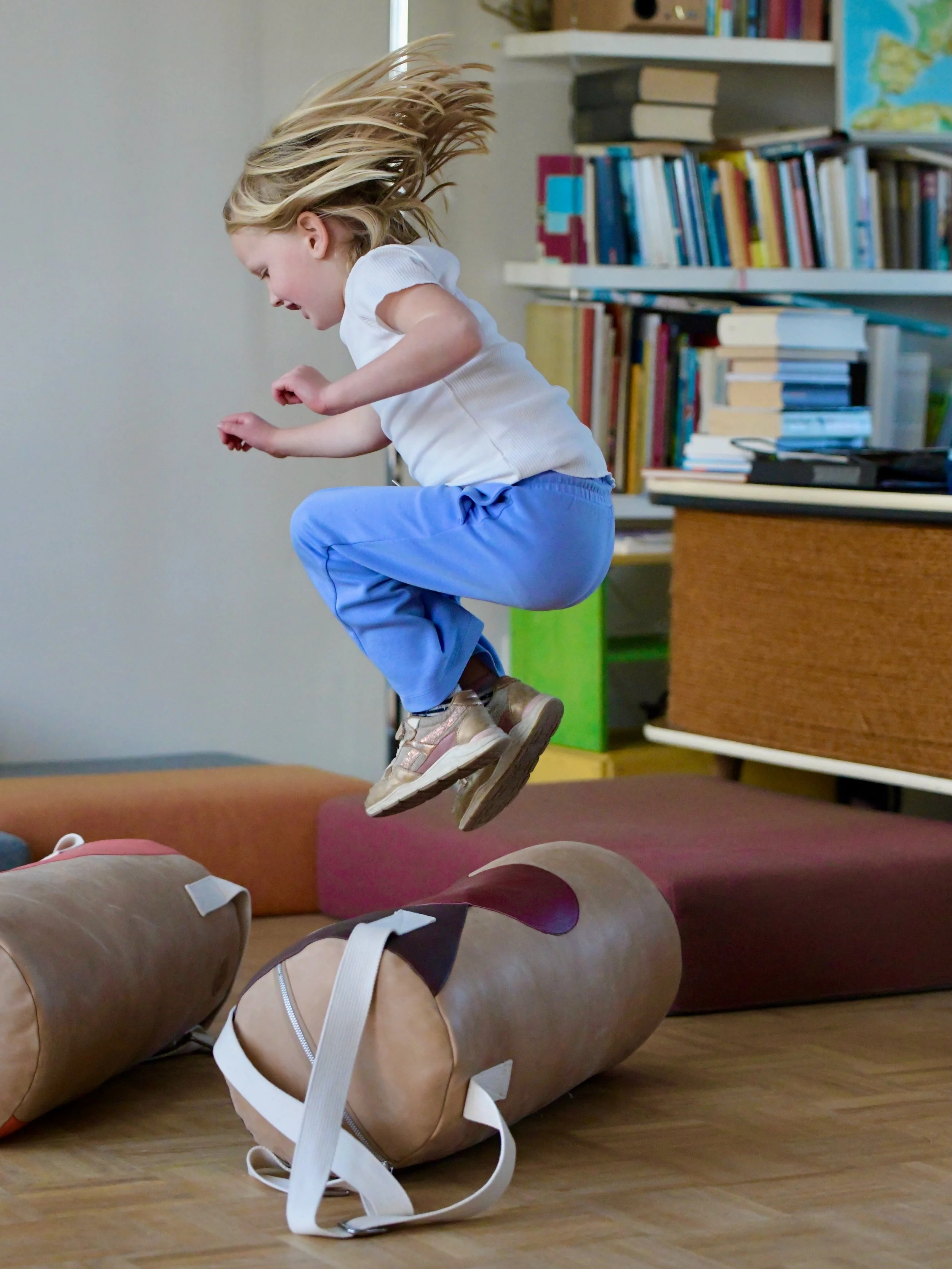
Why talking often isn't enough—even with older children
Especially when it comes to teenagers, it’s easy to think, “Surely they can talk about it.”
And yes, sometimes they can. But not every time they get angry. Even older children often go into a kind of “alert mode” at such times:
Logical thinking is impaired
Conversations tend to fall flat
The body is tense
I've noticed this time and again over the years: action often helps more than words. Or at least it helps relieve some of the tension at first, and then you can sit down again in a calm setting and talk to your children about what's been weighing on them.
And using movement as a way to burn off energy and regulate emotions isn't just for young children!
Boxing for kids and teens—is it really possible without violence?
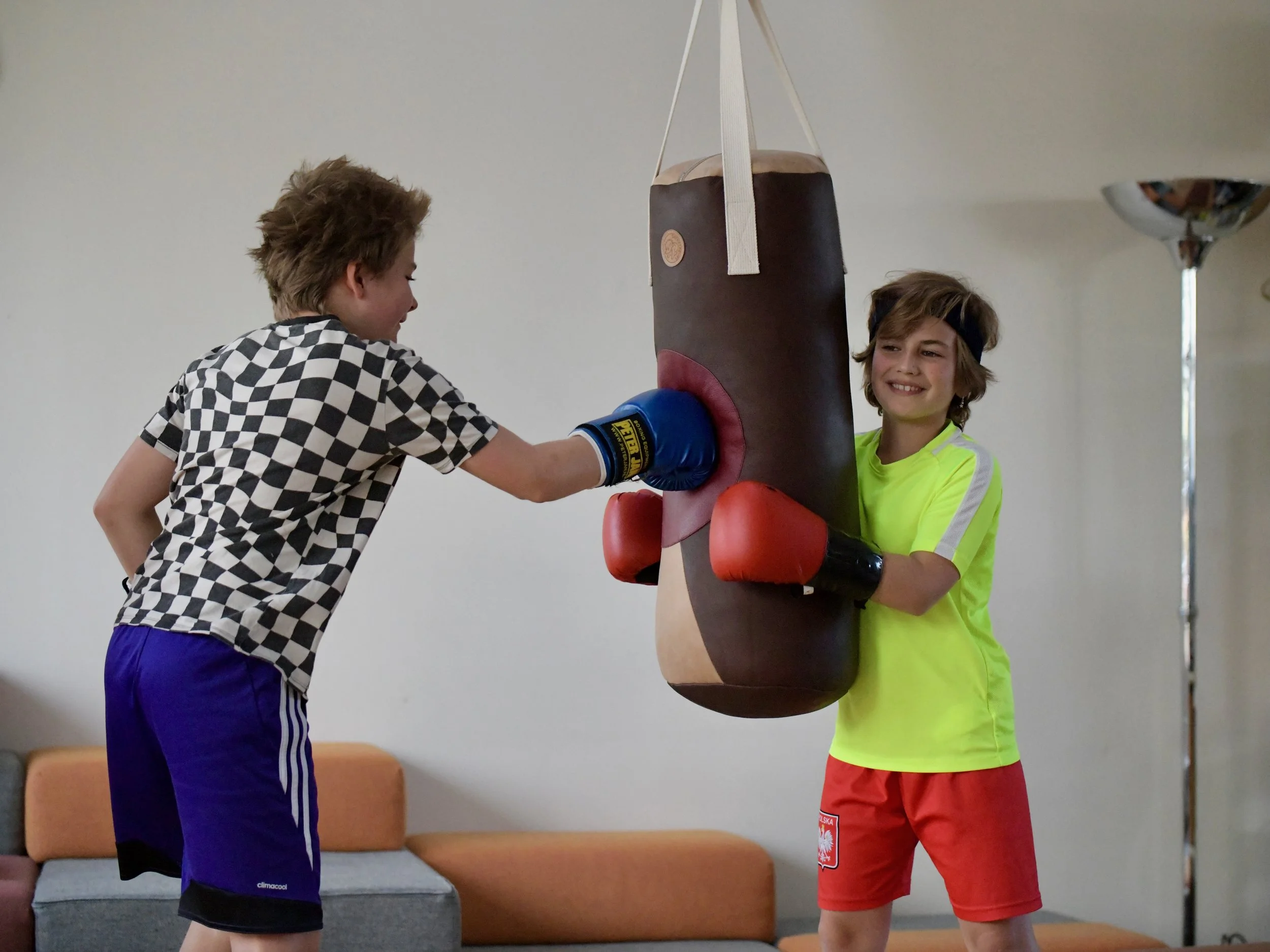
At first, the idea of letting children hit a punching bag made me skeptical myself. Of course, it’s a counterintuitive concept at first, since most parents have very different associations with boxing and hitting. But over time, I came to understand that it’s not about aggression, but about emotional regulation. And that really has nothing to do with age.
The difference is crucial:
Violence is uncontrolled and directed against others
Boxing is a conscious, controlled, and focused activity
Whether they're 6 or 16 years old, children who have a way to channel their energy learn something very valuable: how to manage their own energy.
Why a punching bag has lasted for years with us
What started out as a simple idea for everyday life with young children has stuck. And that’s perhaps what I find most exciting: the punching bag has “grown up” with my kids.
Back then: A place to let off steam when emotions got the better of me.
Today: A way to let off steam after a stressful day at school, a way to cope with frustration or pressure, or sometimes just a way to clear my head.
What has remained the same:
The punching bag is always there.
No appointments, no major hurdles. Sometimes it’s hard to fully address these emotional issues in the midst of a hectic daily routine. Unlike us parents, the punching bag isn’t tied to any schedule and is always available. Of course, you can’t resolve every issue with it, but in most cases it at least offers very effective “first aid.”
It’s safe.
Let your feelings out—without causing any harm. Tantrums can be very exhausting for everyone involved, and sometimes you just can’t handle those outbursts yourself. With a punching bag, it’s different. You can punch it until you have no strength left and have let it all out.
It works without saying much.
And that’s often what matters most.

What children can learn from this in the long run
Looking back now, I realize it was never just about that moment. It was about something bigger:
Self-efficacy
“I can do something when I’m not feeling well.”
Body Awareness
: Perceiving and Managing Your Own Energy.
Emotional Regulation
Don't suppress it—process it.
And that’s something my kids, now that they’re teenagers, still need.

How I Support My Children When They're Angry
What has changed: the conversations.
What has stayed the same: the principle.
I allow emotions to surface, no matter what age. I offer options without putting pressure on anyone. And I try not to feel like I have to solve everything right away. That takes some of the pressure off all of us in the family during those tense and vulnerable moments.

One last thought
If there’s one thing I’ve learned over the years, it’s this: anger doesn’t just disappear as an issue simply because my children are getting older. It changes. And that’s exactly why it’s worth learning how to deal with it in a healthy way early on.
Not perfect, but honest. And with room to grow.
You may also be interested in these articles: