Back-to-School Tips: How to Prepare Your Child for the First Day of School
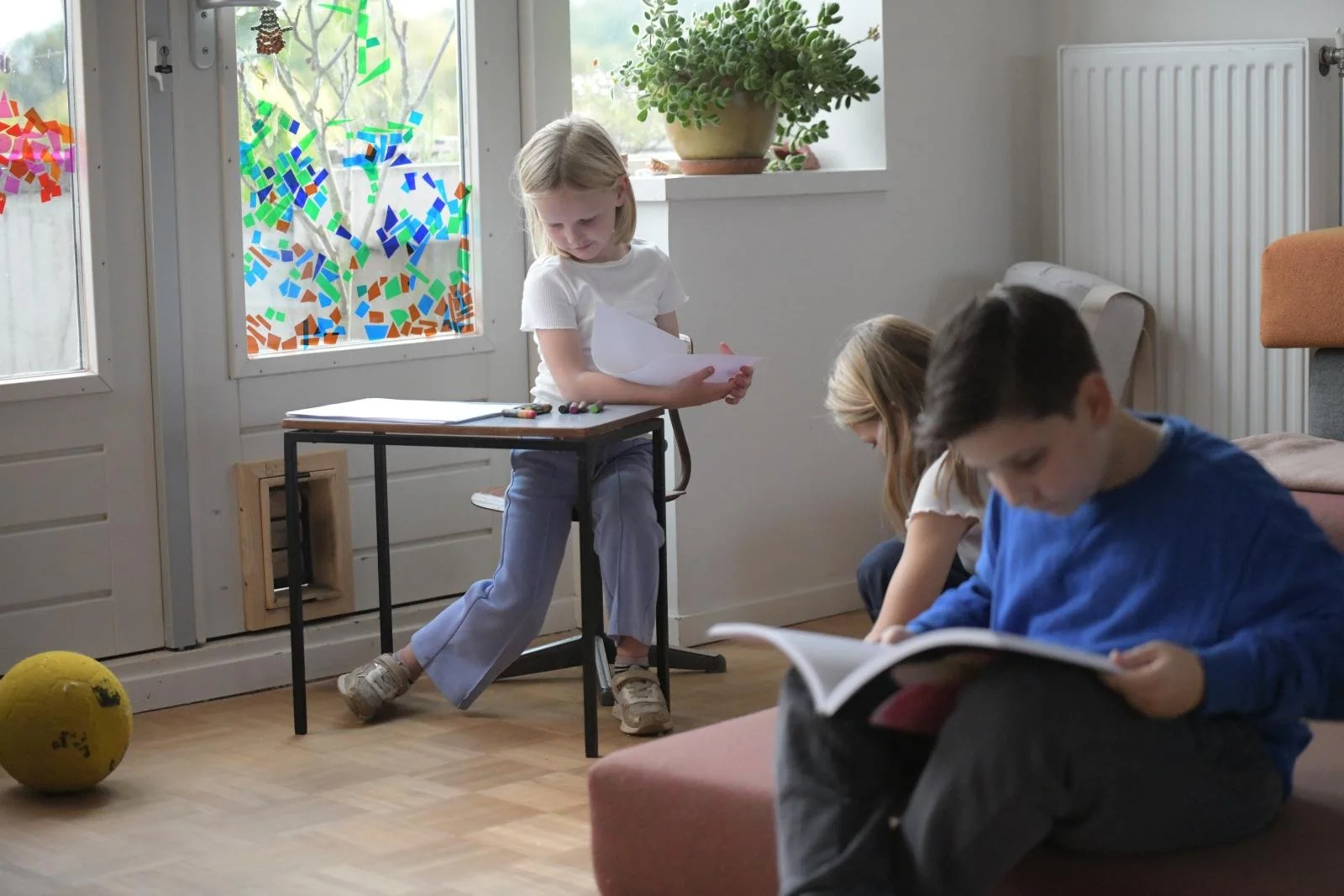
I still remember exactly the night before Zoe's first day of school. She was lying in bed, unable to sleep, and asked me, "Mom, what if I don't like the teacher?" I laughed—inside. Because I was thinking the same thing.
Back to School – Summer is finally here, and then, in what feels like the blink of an eye, it’s over. The backpack is waiting. The alarm clock is going off early again. And your child? They come home exhausted, drop their backpack, and just need a moment to catch their breath.
That's normal. But what happens next makes all the difference.
In this article, you'll learn what really happens during the transition from preschool to school —emotionally, physically, and in everyday life. And you'll find out what you, as a parent, can do to help your child adjust smoothly.
Contents:
Starting School: The Big Leap from Preschool to Elementary School
There are moments in a child's life that may seem small to parents—but are huge to the child. The first day of school is one such moment.
In preschool, the world was still manageable. The teacher knew everyone by name, knew that Leon was afraid of loud noises, and that Mia always needed a hug before starting her day. There were cozy corners, free play, and naps. Time just flowed by. No one looked at the clock.
Zoe loved her preschool. She knew every nook and cranny, every tree on the playground, every step of the cleanup routine. It was her world—small, safe, familiar. And in the weeks leading up to her first day of school, I realized just how much she sensed that this world was about to come to an end. She hugged me more often. She asked more often if I would stay.
Her father made the school cone during that time. Not just any school cone. He had set his mind on making it look like Toothless—the black dragon from *How to Train Your Dragon*, Zoe’s absolute favorite. What he ended up creating was less of a back-to-school bag and more of a work of art: almost a meter tall, with wings, scales, and that crooked grin that only Toothless has. The bag was almost as big as Zoe herself.
On the morning of her first day of school, she took that bag—wrapping both arms around it, resting her chin on it—and walked through the school door with it. She was prouder than I’ve ever seen her. The other kids stared. Zoe beamed. I think that bag gave her more comfort that morning than anything I could have said.
Sometimes you just need a dragon by your side.
And then: school.
Suddenly, there are classes. Class schedules. A seat that’s yours—but not really, because there are twenty other kids sitting there too. A teacher who’s still a stranger. Rules that are new. Expectations you don’t quite understand yet. And all of this—every day, right from the start.
For many children, this isn't exciting. At first, it's just hard work.
Preparing Your Child for School: What Really Happens During the Transition
Adults often underestimate what first-graders accomplish in their first few weeks. It's not just about learning letters or sitting still. It's about finding their way in a completely new social world.
Who am I here? Who are the others? Who can I trust? Am I good enough?
These aren't conscious thoughts—but they're there. In the body. In the tension after school, in crying for no apparent reason, in the sudden tiredness that feels different from normal tiredness.
In the weeks leading up to Zoe’s first day of school, I did everything I could to prepare her. We visited the school ahead of time. We practiced the walk to school. And then I started making her school goodie bag—by hand, using fabrics she picked out herself. Stars and bunnies, of course. Not because I’m so creative, but because I needed something I could do for her. Something tangible, in a time full of uncertainty.
The school goodie bag became her pride and joy. She opened it just to see what was inside three days before her first day of school.
From a developmental psychology perspective, the transition from preschool to school is one of the biggest in early childhood. During this phase, a six-year-old’s brain is in constant stress mode—not because anything is wrong, but because it has so much to process. New faces, new routines, new demands. That takes an enormous amount of energy.
And that energy has to go somewhere.
First-Graders: When Your Child Suddenly Acts Differently After School
Many parents say the same thing during the first few weeks of school: The child who bravely went off to school that morning comes home in the afternoon—and is a different person.
Cranky. Sensitive. Easily overwhelmed. Sometimes it cries over little things. Sometimes it just stays quiet and withdraws.
With Zoe, it was the silence. She came home, barely said a word, ate her snack, and stared out the window. I asked her how it went. “Fine,” she said. That was all. It wasn’t until an hour later, when the tension had eased, that she started talking. That Emma sits next to her. That the teacher is funny when she talks with her hands. That during recess, she didn’t know where to go.
That's not a step backward. That's emotional exhaustion.
Your child has been on the go all day. They’ve adapted, paid attention, stayed focused, and held back. They’ve tried their best—more than you realize. And now, at home with you, they let loose. Because they’re allowed to. Because they feel safe.
That's actually a good sign. But it needs to be handled properly.
Back-to-School Tips: Why the First Day of School Is About More Than Just Learning
The start of school isn't just about new notebooks and a fresh pencil case. It means new teachers, new class dynamics, new expectations—and a mind that's working at full speed every day.
Many children don't just come home tired in the afternoon. They come home overwhelmed—overwhelmed by impressions, stimuli, and stress. What they need then isn't a screen or a couch—but a way to let it all go.
I realized in the first few weeks that Zoe didn’t need homework after school. She didn’t need activities. She needed to move. Just to get outside, run, and let off steam—and then she was back. Back to being herself. What helps is less than you’d think: no elaborate activities, no packed afternoons, no pressure. Instead, space. Space to settle in. And then—movement.
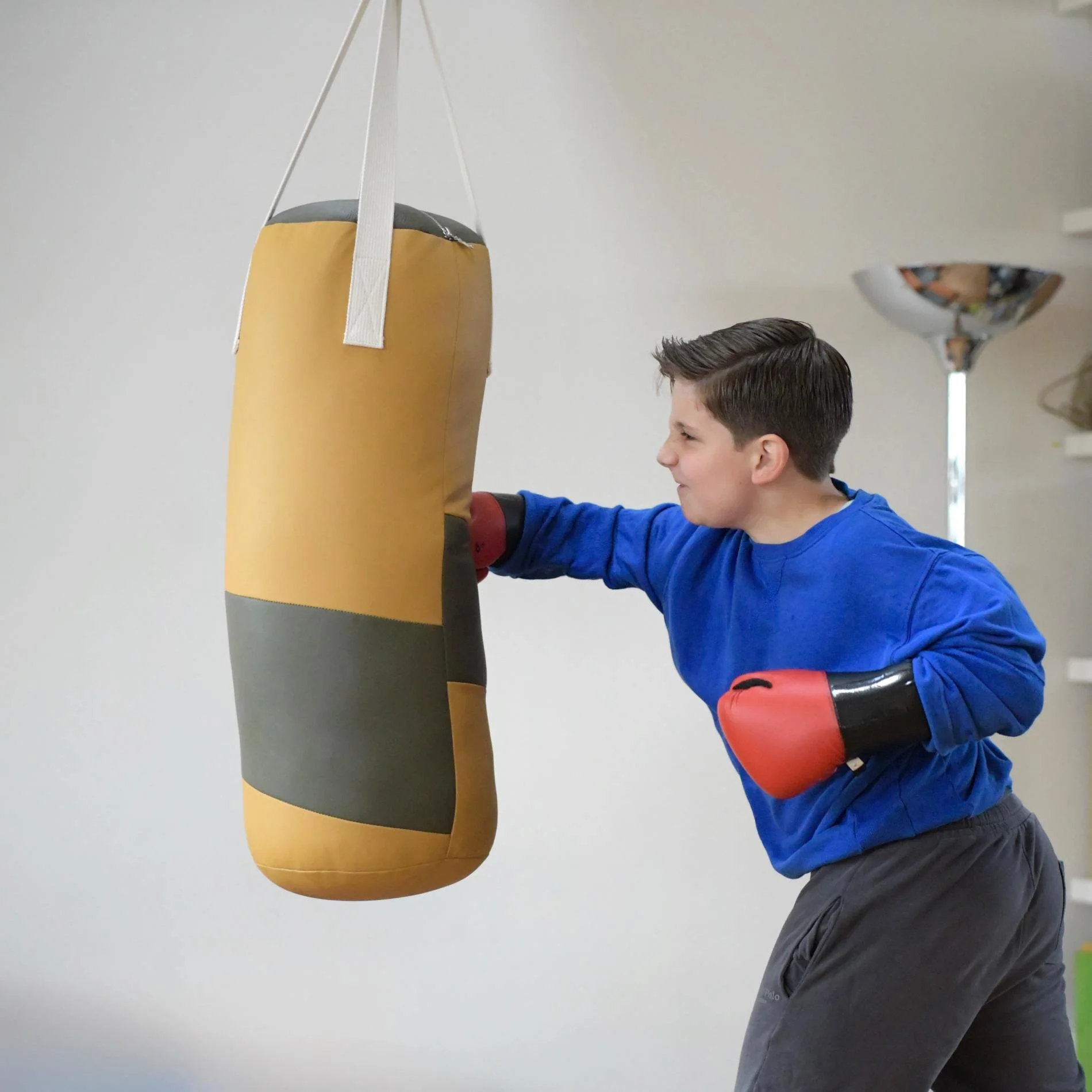
After-School Physical Activity: The Best Way for Kids to Recharge
Studies show it, and parents confirm it every day: Children who burn off energy through physical activity after school are more focused, more balanced, and sleep better afterward. Exercise isn’t just a nice-to-have—it’s a real tool for mental strength.
The problem: Not every child wants to go to soccer practice. Not every child likes team sports. And club activities don't always fit into the family schedule.
For a long time, Zoe didn’t want to do any sports at all. She danced, then quit. She tried swimming, but wasn’t thrilled. And I stopped pushing her. Instead, we just played outside more—running around, jumping. Until we stumbled upon the punching bag—more by chance than anything else, more out of curiosity. And suddenly, there was that spark.
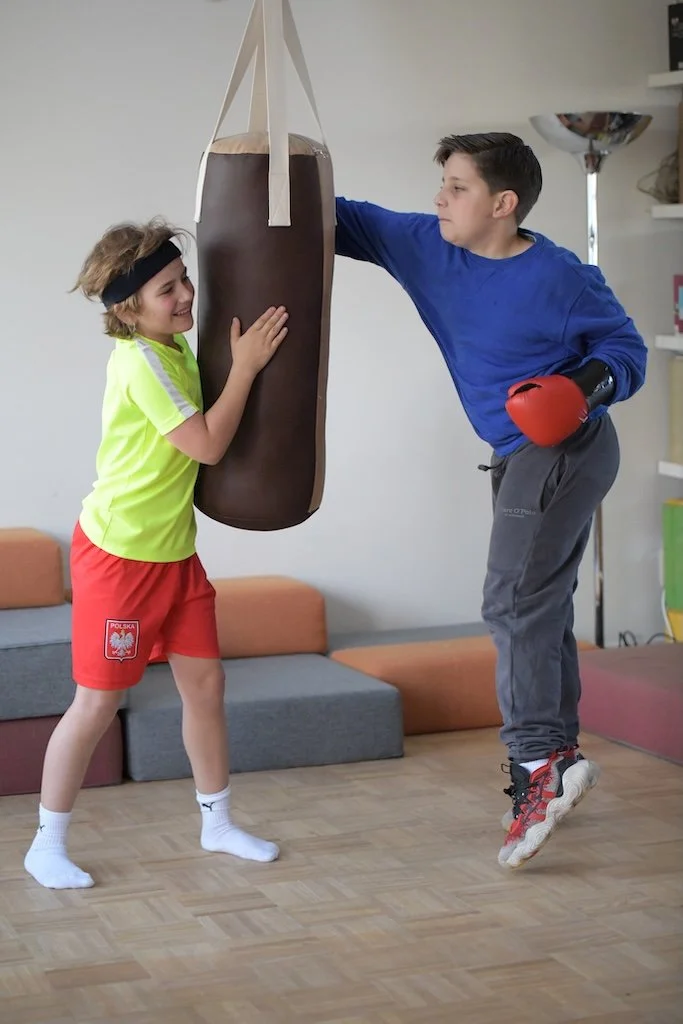
This is exactly where a simple solution comes in—one that's been working for us at home for months: a punching bag.
Punching Bags for Kids: Why Boxing After School Works So Well
At first glance, boxing sounds like a fight. But that's not what it's about at all.
A punching bag at home is:
An outlet. Frustration, tension, pent-up energy—let it all out. No drama, no arguments. Just let it all out.
A sense of accomplishment. Every successful shot boosts self-confidence. Children realize: I can do this. I’m getting better.
A workout with no hassle. No need to drive to practice. No set schedule. Just put on your gloves and get started—even if it's just for ten minutes.
A ritual. School’s out, put down my bag, hit the punching bag. It provides structure without feeling like structure.
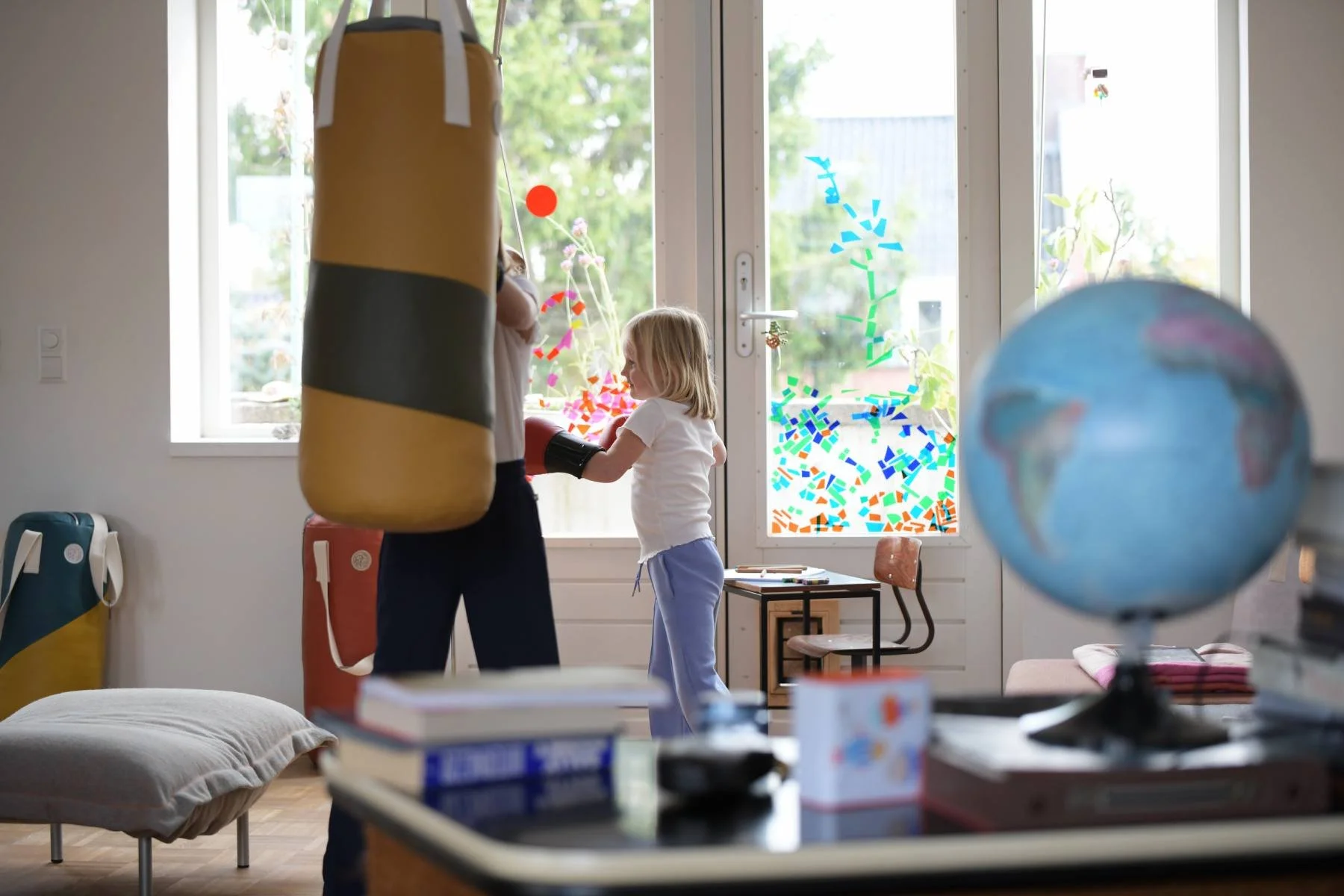
What surprised me the most: Zoe talks while boxing. She throws punches, and between two punches she tells me about school—about the girl who wouldn’t let her sit down today, about the moment when she knew the answer but didn’t dare raise her hand. It’s as if the movement unlocks something—not just in her body, but also in her mind.
Boxing is one of the most direct ways to relieve physical and emotional stress, especially for children who spend a lot of time sitting in school and have to endure a lot.
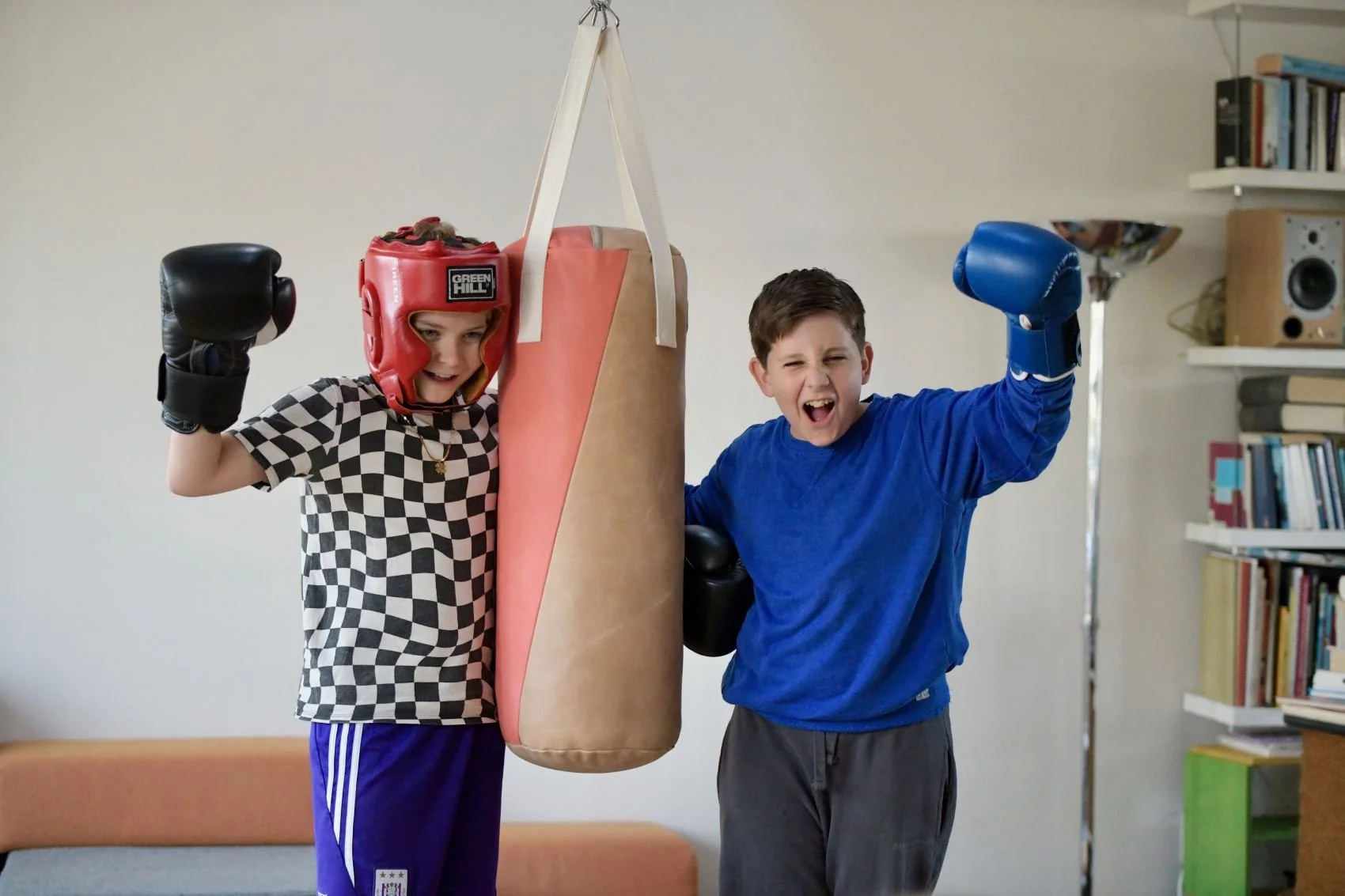
Stress-Free Homework: How Exercise Changes the Afternoon Routine
Everyday school life requires discipline. But discipline doesn't have to feel like a burden.
When exercise becomes part of the afternoon routine— not as a chore, but as a way to unwind —a healthier routine naturally takes shape. First, exercise; then, homework. First, clear your mind; then, fill it up again.
Things are almost running on autopilot around here now. Zoe comes in, takes off her shoes, and heads to the punching bag. Sometimes for five minutes, sometimes for twenty. Afterward, she sits down and does her homework—without me having to ask. I don’t know if it’s because of her or the punching bag. Probably both.
A Kids' Punching Bag for Home: The Perfect Back-to-School Gift for First-Graders
A punching bag at home doesn't have to look like a gym. Quite the opposite.
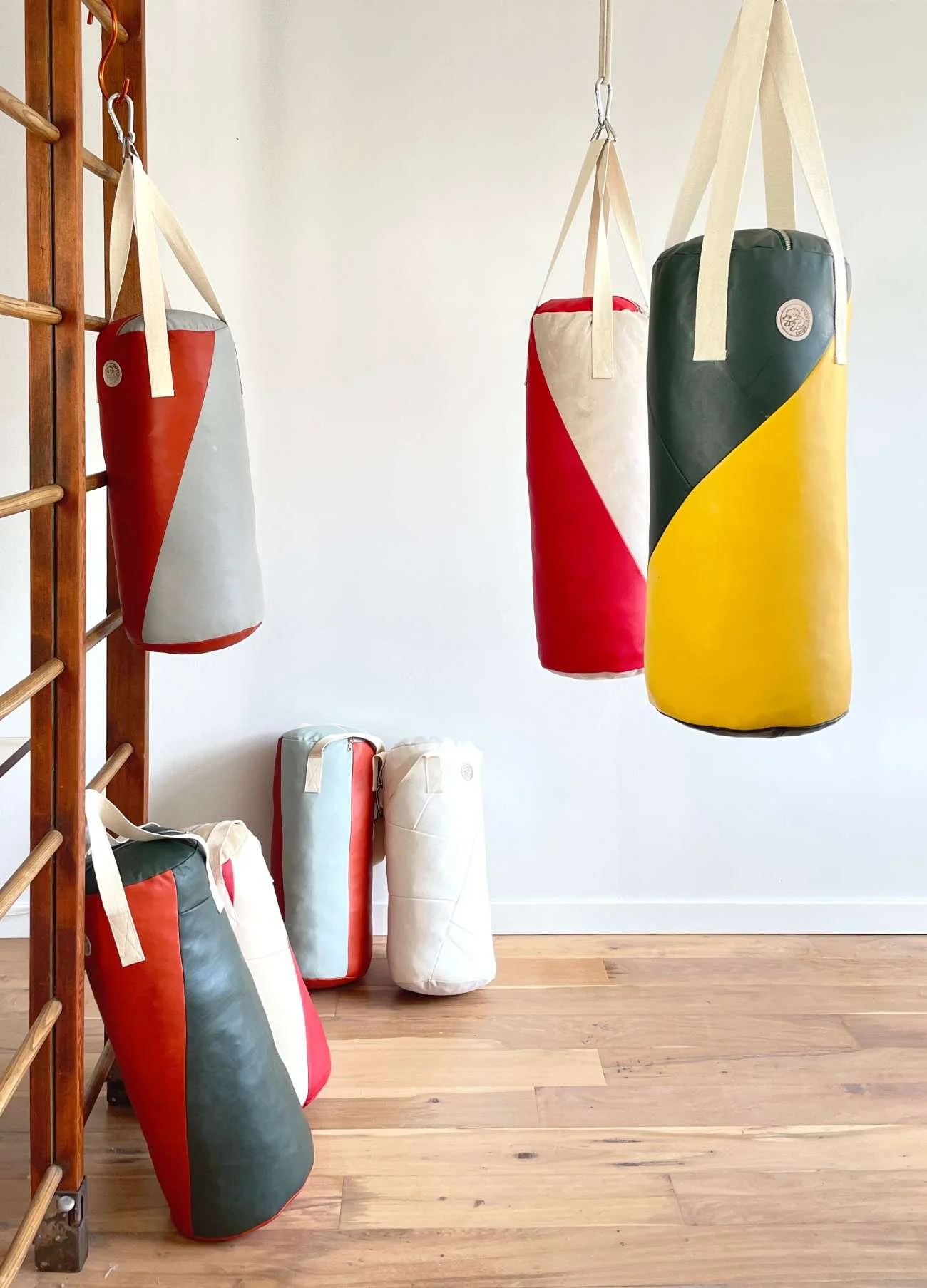
When I started looking for a punching bag for Zoe, my first thought was: This is going to be ugly. Black faux leather, looking kind of out of place in our living room. I searched for a long time—and then I found Snekkerbuks. And somehow, I knew right away: This is the one.
Snekkerbuks punching bags are made exactly for this: for real living rooms, kids’ rooms, older buildings, and lofts. With natural colors, genuine leather, and a design that feels good—and looks good. Ours hangs between the bookshelf and the window. Zoe thinks it’s beautiful. So do I.
The JUNIOR-LINE is designed specifically for children and teens: lighter, shorter, and tailored to smaller bodies and growing hands. And like all Snekkerbuks products, it’s handmade in Amsterdam from sustainable cowhide leather with LWG Gold certification.
No plastic. No faux leather. No disposable products.
A punching bag that lasts— as long as your child grows, and beyond.
Zoe has been going to school for almost a year now. The question of whether she likes her teacher has long since been answered—she loves her. Emma has become her best friend. And the punching bag is still hanging between the bookshelf and the window.
Some things just take time. And a little space to let go.
Conclusion: What Really Helps Your Child When Starting School
The first day of school is exciting—for your child and for you. And the weeks that follow are often more exhausting than expected. Not because anything is going wrong, but because so many things are new all at once.
What helps the most during this time isn’t the perfect school supplies or the most packed afternoon schedule. It’s space. Space to settle in. Space to let go. And movement—which allows the body to process what the mind can’t yet put into words.
A kids' punching bag at home is one of the simplest and most effective solutions for this. No club meetings, no hassle. It's just there—and ready whenever your child needs it.
Zoe still boxes. Emma is her best friend. And the question of whether she likes her teacher has long since been answered.
Sometimes you just need a good place to let go. And a dragon by your side.