Kids' Room Ideas for Active Kids: Exercise, Fun, and Little Adventures
Ideas for children's rooms for active kids don't require a lot of space or a complete remodel. Often, all it takes is an open area and an activity that really suits the child.
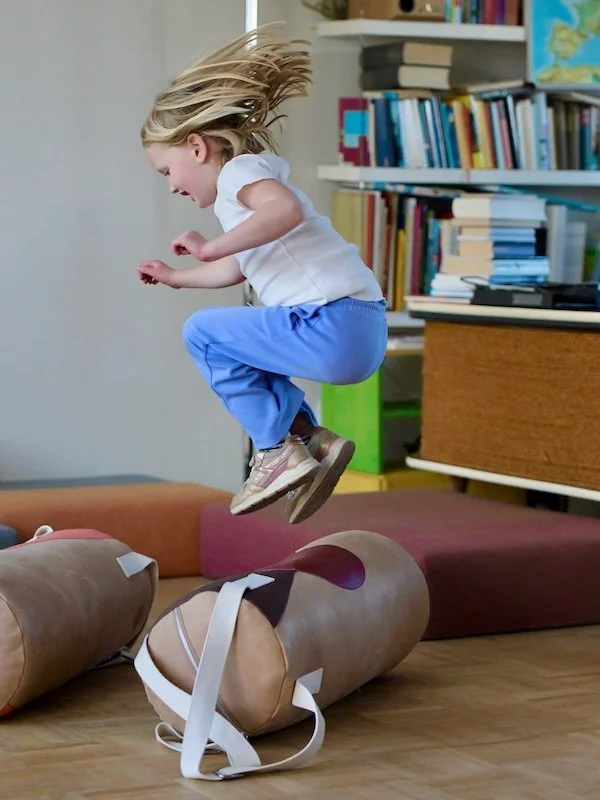
After all, kids are always on the move. They climb on furniture, jump from the carpet onto the bed, set up an obstacle course, and turn an empty corner into a cave. A child’s room can leave space for that, instead of cramming every wall and every square meter full.
Here are eight ideas to bring more movement into your child's room —from a kids' punching bag to a swing. Some make use of the floor, others the walls or the ceiling. This way, you can make the most of even a small space.
Contents:
A children's room that invites kids to play and move around
When setting up a child's room, it helps to start by taking a look at daily life. Where does your child like to play? What gets used all the time? And what's just sitting around?
An open floor space is often more valuable than another piece of furniture. Children can use it to build things, dance, roughhouse, make hide-and-seek spots, or create an obstacle course. No special equipment is needed for this.
Simplicity also helps when it comes to storage. Toys that children can reach on their own are more likely to be played with. Baskets, boxes, and open shelves often work better than items that have to be taken out of tall cabinets.
The same applies to equipment for physical activity: If a trapeze, punching bag, or swing is simply there, kids will use it as they go about their day. They don’t have to ask first if it’s “playtime.” They’ll hang from the rings for a moment, throw a few punches, or take a swing.
A child's room doesn't have to look like a gym. Physical activity can be a natural part of the room's design.
Kids' Room Ideas for Active Children: Don't Clutter Every Surface
Sleeping, playing, and physical activity can all fit well into one room if not every open space is assigned a specific function.
The bed is in a quieter corner. A rug might mark off the play area. There’s also a space where children can swing, box, or climb.
Fixed room dividers are rarely necessary for this. Children use rooms differently anyway than adults intend. The reading nook becomes a camp, the rug becomes an island, and the space under the swing becomes a garage.
In small rooms, it helps to keep the center clear. Place large pieces of furniture along the walls, store boxes under the bed, and put small items in baskets—and you’ll have more room to move around.
There’s often room to go up as well. A trapeze, gymnastic rings, a swing, or a rope ladder make use of the room’s height without permanently taking up floor space.
Which physical activity is right for your child?
Some children climb everything. Others love to swing. Some love balls, some love boxes, and some hang upside down from anything they can grab.
You can use that as a guide.
If your child is always balancing on the arms of the sofa anyway, a climbing structure is probably more exciting than a hanging chair. Kids who like to swing will get more out of a swing or a trapeze. Children who channel a lot of energy into fast movements often enjoy a punching bag.
The space also plays a role. Gymnastic rings and a trapeze take up very little floor space. A climbing wall uses one wall, and a punching bag requires an open area in front of it. A swing and a punching bag work especially well in areas where there is more space overhead than on the floor.
It's not important to fit in as much as possible. One good item that gets used often is worth more than five things that just sit or hang around.
8 Ideas for Getting Kids to Be More Active in Their Rooms
1. A kids' punching bag—for boxing, exercising, and playing
A kids' punching bag adds some action to the room without being too demanding.
Kids can try out punches, come up with combinations, dance around the bag, or incorporate it into a game. The punching bag can be a training partner, an obstacle on an obstacle course, or the opponent they need to defeat in their next adventure.
You don't need a full boxing workout for this. Even just a few punches here and there can add some movement to your daily routine.
A hanging punching bag also takes up very little floor space. When it's not in use, the space underneath remains free.
The Snekkerbuks JUNIOR-LINE is designed for children and teens. The punching bags are handmade in Amsterdam and can remain a part of a child's room for many years.
As children get older, their play usually changes as well. Younger children simply hit the bag, experiment, and move around it. Later on, they start throwing more targeted punches, trying out small combinations, or playing boxing games with siblings and friends.
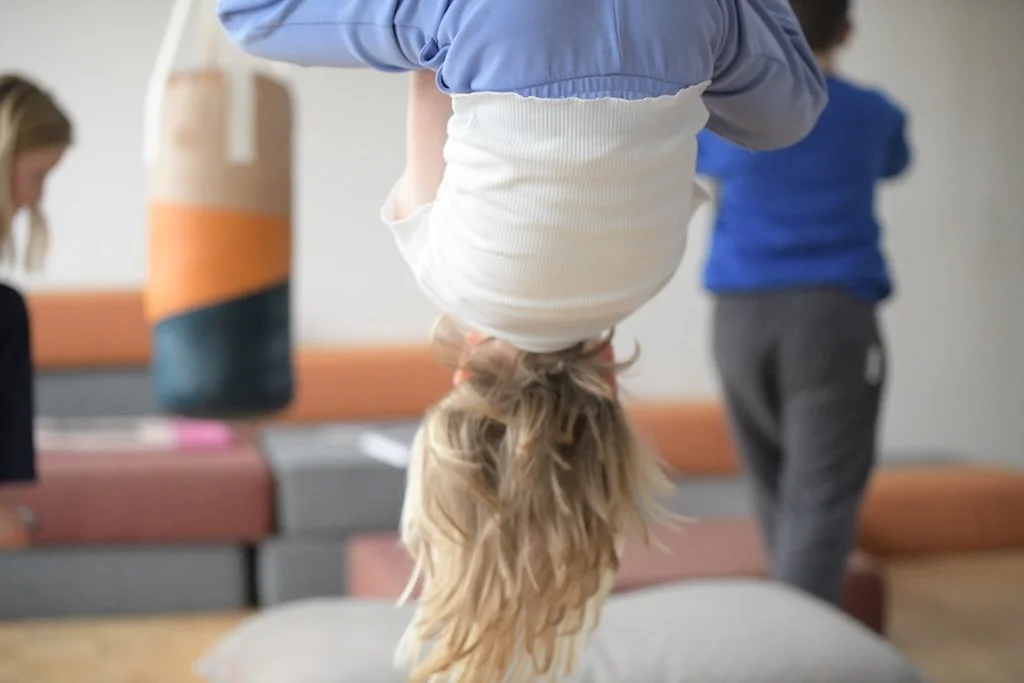
2. A trapeze for hanging and swinging
A trapeze brings a kind of movement to a child's room that nothing on the floor can replace.
Kids hang from it, swing back and forth, pull their legs up, or come up with circus acts. They don't need instructions to do this. Most of the time, they just start experimenting on their own.
A trapeze is especially practical in smaller rooms. It makes use of the height, while the space below remains free for playing.
In play, a trapeze is rarely just a trapeze anyway. Today it’s part of the circus, tomorrow part of a pirate ship, and the day after tomorrow part of a homemade obstacle course.
3. Gymnastics rings for young acrobats
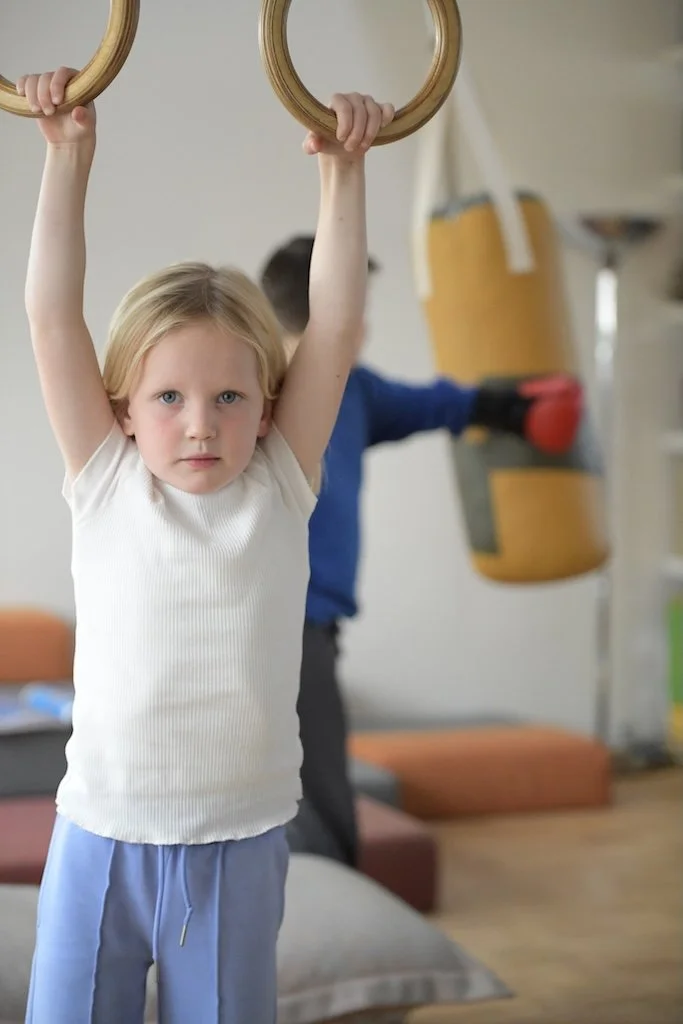
Gymnastic rings are simple but versatile.
Children hang from it, swing, pull their legs up, or try to pull themselves up. Over time, new movements emerge without the need for new equipment.
Younger children often just use the rings to hang and swing. Older children experiment with more strength and body control.
Gymnastic rings take up hardly any space in a room. They hang from the ceiling, leaving the floor clear.
If you want to add some physical activity to your child's room without setting up a large climbing frame, two rings will go a long way.
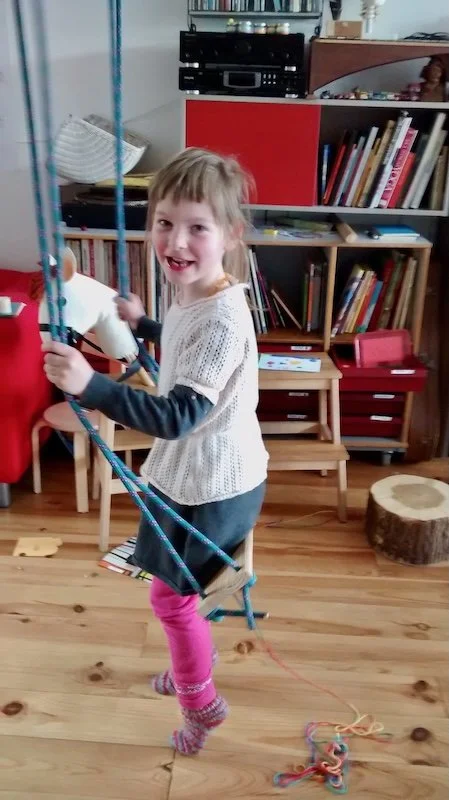
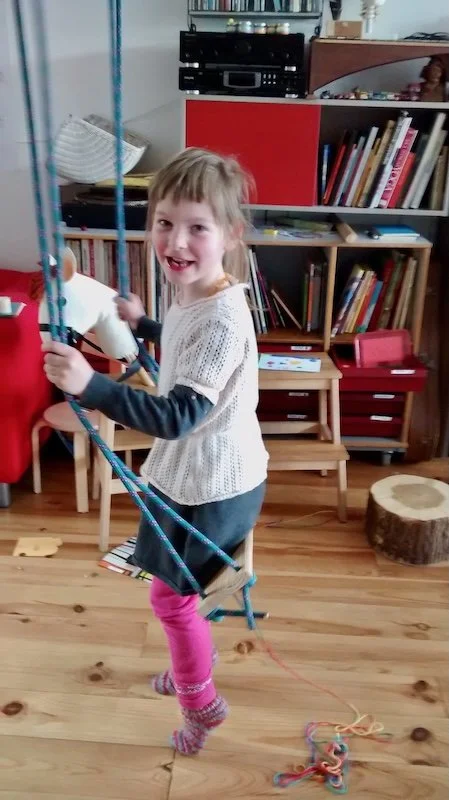
4. A swing in the children's room
A swing isn't just for the backyard or the playground.
In the kids' room, it quickly becomes part of everyday life. Kids swing on it, dangle their legs off it, or incorporate it into their games. Then, all of a sudden, it's a boat, an airplane, or a magic carpet.
It's especially well-suited for rooms where there isn't much floor space left. The swing makes the most of the vertical space.
And it doesn't always have to be used vigorously. Some children swing slowly while telling a story, listening to music, or just sitting there for a while.
5. A climbing seat or disc seat
A disc chair brings a different kind of movement to the room. You can sit on it, spin around, sway gently, or constantly change your position.
A small climbing structure is better suited for children who want to climb high.
Both are well-suited for corners that would otherwise go largely unused. This gives an empty space a purpose without having to place a large piece of furniture there right away.
Climbing structures, in particular, change how we perceive space. Suddenly, there’s not just the floor and furniture, but paths leading upward.
6. A fire department ladder or rope ladder
A ladder instantly brings adventure to a child's room.
Children climb up, climb back down, and usually quickly figure out where the ladder is supposedly leading.
Today we're going to the treehouse, tomorrow to a pirate ship, and the day after tomorrow to a secret cave.
A rope ladder also moves as you climb it. That's what makes it especially exciting for many children.
Here, too, the height of the room is the main focus. This is handy when the bed, closet, and bookshelf already take up enough floor space.
Visually, a ladder also appears less bulky than a large climbing frame and can therefore be more easily integrated into a typical children's room.
7. A hanging chair or a blanket to snuggle up in
An active kids' room isn't just about action. A hanging chair can be used for swinging and also serve as a cozy retreat. Kids can read, tell stories, listen to music, or just sit and gently sway in it.
A large piece of cloth offers even more versatility. It can be turned into a cave, a roof, a tent, a cape, or a wall for a hiding place.
Things like that often remain interesting for a long time because they don't serve any specific purpose.
Sometimes the sheet becomes a sleeping area in the living room or hangs over two chairs to serve as a roof. Other times, it’s part of an obstacle course.
So a quiet space and an activity area aren't mutually exclusive. Both can be set up right next to each other.
8. A small climbing and play area
You don't need five pieces of equipment for an exercise corner.
A punching bag and a mat are enough. Or two gymnastic rings suspended over an open space. A rope ladder in the corner. A swing next to a basket of balls and jump ropes.
Kids figure these things out on their own anyway.
A swing, a pillow, and a mat come together to form an obstacle course. The punching bag becomes the next station. The gymnastic rings mark the finish line. Adults would probably have planned this sequence differently—and that’s exactly why free play works so well.
A rug or mat can help tie the space together visually. The rest of the room remains open for sleeping, reading, building, or playing.
Even small children's rooms offer space for physical activity
Just because a room is small doesn't mean you have to do without elements that encourage movement.
Items that make use of walls or the ceiling are helpful. Gymnastic rings, a trapeze, a swing, and a children's punching bag take up very little floor space.
Often, the problem isn't so much the size of the room as the fact that there are too many things in it at once. Maybe there's a dresser whose contents would fit in the closet. Maybe the middle of the room is full of boxes, even though they could just as easily be stored under the bed.
A child's room quickly becomes more spacious if not every available area is filled with furniture. That's why it's worth asking: What does this room actually not need?
That doesn’t mean everything has to go. Items that are used frequently should remain within easy reach. Only things that no longer serve a real purpose should be cleared away. An extra square meter can be more valuable to a child than an additional shelf.
There, you can hang a swing, use a punching bag, or just play on the floor.
Indoor physical activity for children doesn't have to be planned
Children don't need an organized activity for every physical activity.
A range of motion often works well precisely because it's always there.
The child walks past the punching bag and hits it twice. He hangs from the gymnastic rings for a moment. He swings for five minutes. Later, he builds an obstacle course out of pillows.
To make this work, items should be easily accessible. A basket can hold balls, jump ropes, or boxing gloves. Open shelves are helpful for items that children can reach on their own.
The less preparation is required, the more likely a space is to be used.
Having an open floor space is almost as important as the toys themselves. It can be used for running around in the morning, for building things later on, and be cleared away again in the evening.
Conclusion: Kids' Room Ideas That Grow With Your Child
Children's rooms are constantly changing because children grow so quickly. That's why it's important for the furnishings and play elements to be flexible.
At first, a kids' punching bag is simply pushed and punched. Later on, children may become interested in specific punch combinations or simple boxing games.
On the parallel bars, children start by hanging and swinging. Over time, they begin to do their own exercises. A swing may remain their favorite spot for years, but eventually it’s used less for wild swinging and more for sitting and listening to music.
That's why a child's room doesn't have to be fully furnished all at once. It's best if the room remains just as dynamic as the child who lives in it, growing along with the child.